
Dry Needling in Northern Colorado: Does It Actually Fix Pain?
Does Dry Needling Really Relieve Pain in Northern Colorado?
Having tiny needles poked into a painful muscle knot is unnerving. But can it help?

From the New York Times, Featuring Dr. Polka
By Andrea Javor
April 20, 2026
Over the past decade, a strange practice has worked its way into physical therapy offices. It’s not exactly acupuncture but still involves a therapist sticking tiny needles under your skin and letting you suffer for a short time.
Dry needling — the insertion of ultrathin needles into trigger points to loosen them — was codified by the American Medical Association as an acceptable form of therapy in 2016. Since then, it has become a standard part of orthopedic care, with superstar athletes like Travis Kelce and Caitlin Clark using the treatment for recovery and maintenance.
Fans of the procedure say it can offer near instant relief, describing a melting of pain or a feeling of release at the needling site. Others say at best it’s a temporary fix.
And while the therapy is largely considered safe, sticking needles in the body does carry some risk. In December, T.J. Watt, a linebacker for the Pittsburgh Steelers, suffered a collapsed lung after a session of dry needling. (He eventually recovered and finished out the season.)
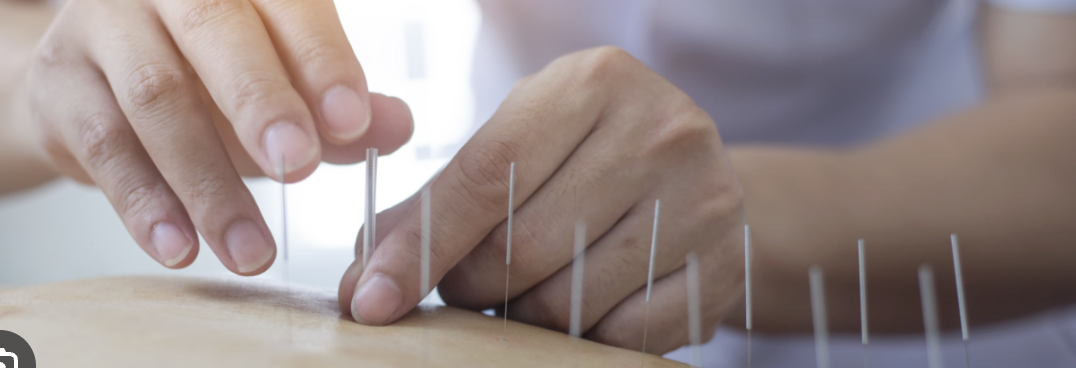
What does dry needling do? Nobody knows…
So what do you need to know about dry needling?
Is it a clinical breakthrough for chronic pain or just another overhyped wellness trend?
What is dry needling?
The basic idea behind dry needling is to create a tiny injury in a painful part of the body in hopes of increasing blood flow and loosening tight muscles, tendons and other tissue. The needles don’t inject anything — hence they are “dry.” The treatment is most often used to treat overuse or stress injuries tied to “trigger points,” or muscle knots.
Generally, practitioners will either leave the needles in place or gently slide them up and down under the skin (called pistoning). Other times, they may run electricity through the needles to further relax the muscle. Either way, the sensation can be strange. “I saw the muscles on my arm dancing while it was being done,” said Caroline Miller, a 64-year-old competitive swimmer from Maryland, of her experience with standard dry needling. But, she added, “the next day all the pain went away.”
Though dry needling has generally been used to target muscles, over the last decade the treatment has expanded to tendons, scar tissue, fascia and bone surfaces. Some evidence even suggests that it may improve headaches. But despite their similarities, dry needling is not the same as acupuncture.
“Dry needling focuses solely on musculoskeletal targets, like trigger points,” said Melissa Monroe, an acupuncturist in Los Angeles. By contrast, she added, acupuncture incorporates traditional Chinese medicine principles around energy and fascia pathways in the body.
Does it work?
The answer, as with many physical therapy procedures, is: It depends.
While evidence of long-term benefits of dry needling are low-quality, many studies have found it’s is more effective than a placebo and at least as effective as traditional physical therapy techniques, like exercise and massage, in the short term.
Many patients report an immediate sense of relief after a session, as well as an increase in muscle strength and range of movement, said Jan Dommerholt, a physical therapist in Maryland who runs a certification program.
Oddly enough, it’s still not clear exactly how needling works. While experts agree that muscle knots exist, not all agree they are the cause of myofascial pain or whether needles are the best way to release them.
“Dry needling at best is a short-term solution that ignores the root cause of the issue,” said Rhett Polka, a physical therapist in Loveland, Colo. He argues that dry needling only temporarily calms symptoms like tightness or spasms and bypasses deeper physiological issues.

Medical professionals should be focused on the root cause, not symptoms.
“There are therapies like heat and gentle massage that are just as effective for loosening muscles,” said Nelin Krull, a physical therapist in Toronto.
Even those who promote needling say it’s not a panacea, and that it should be administered by a qualified professional, often alongside other treatments, like joint mobilization, soft tissue work, therapeutic exercise or gait training.
Some studies have found that electro-stimulation can deliver faster pain relief, but again, only in the short term. When used for headaches, randomized trials have found that needling can help, but no more than other therapies.
While Medicare does cover the treatment for lower back pain, many insurance companies do not.
Is it safe?
Studies show that when practiced correctly, dry needling rarely leads to significant complications, though the risk is not zero. Minor side effects, like bruising, bleeding or temporary pain after treatment are common, according to one 2020 study.
More serious events, like worsening symptoms or forgotten needles were exceedingly rare, appearing in less than 0.1 percent of cases. The risk of a collapsed lung, as Mr. Watt experienced, is even rarer.
Certification programs have expanded in recent years, so it’s important to find a qualified, experienced clinician, though it’s often complicated. State laws dictate certification requirements, but they vary. Maryland and New Jersey, for example, require 80 hours of education, while Virginia asks that a clinician simply “show competency.” Seven states have no laws at all.
Because of a lobbying effort by acupuncturists, California, New York and Hawaii currently restrict the procedure to licensed acupuncturists.
Ashley Katzenback, a physical therapist in Cape Cod, Mass., recommended treating dry needling as you would any other specialized medical care, asking clinicians “what type of certification they have, where they did their training and how long they’ve been practicing.”
Regardless of who does it, dry needling isn’t appropriate for pregnant people or those with bleeding disorders, a weakened immune system, lymphedema (swelling), cancer or an active skin infection.
At the end of the day, dry needling is relatively safe and effective at loosening muscles and easing pain in the short term. Some patients swear by the therapy, though it’s probably no more effective than other treatments, and it may not address the underlying causes of pain.
A version of this article appears in print on April 21, 2026, Section D, Page 6 of the New York edition with the headline: Dry Needling and Pain Relief. Order Reprints | Today’s Paper | Subscribe
One80’s stance on dry needling in Northern Colorado? We don’t use it because it is at best a placebo and has greater chance of causing more damage than solving the problem. We avoid a gimmick treatments (needling, cupping, decompression, shockwave, etc) because they never get to root cause and end up costing patients more time and money lost.
If you’re in Northern Colorado and you’d like to experience the opposite of everything else out there, you are ready to do a One80. Our patented techniques have been proven over the last 20 years to get patients better and back to normal activity in an average of 3 visits. To find a One80 provider near you in the US, Canada or Europe, visit our provider page at www.one80pt.com.
To schedule a FREE consultation at the original One80PT in Loveland, Colorado just click here or call (970) 593-9300
Leave a Reply
Want to join the discussion?Feel free to contribute!