
You’re Not ‘Just Getting Older’: The Truth About Chronic Back Pain for Active Adults in Northern Colorado.
You’re Not ‘Just Getting Older’: The Truth About Chronic Back Pain for Active Adults in Northern Colorado.

Welcome to the Revolution
“It’s Just Part of Getting Older.” That’s Not a Diagnosis and it’s Not True.
Are you in your late 30s, 40s, or 50s and you’ve been dealing with low back pain that comes and goes, or lately, comes and stays? Have you been told some version of this:
“At your age, this is pretty normal.”
“You need to stop working out/lifting/bending over…”
“Your MRI shows degenerative changes.”
“Your only option is surgery.”
“You may just have to learn to manage this.”
These statements are offered as explanations. But they’re not. They’re a medical system built on symptom modification, cutting costs at patient’s expense and defaulting to the most available narrative. Here is the truth, pain is not inevitable, it’s not normal, it’s not age-related and the conventional model’s “fixes” usually fail.
Here is what we know at One80 after treating thousands of active adults in Northern Colorado: low back pain in a 40-60 year-old who is active is almost never purely a structural or age-related problem. The same is usually true for someone who has a desk job or is “inactive.” It is a movement problem. A nerve – muscle communication problem. A problem with identifiable causes and addressable solutions.
Why Active Adults Are Especially Prone to Chronic Low Back Pain
Have you ever wondered, “shouldn’t being active protect me from back pain?” In many ways, yes. But the specific lifestyle of a busy, active adult in the 40 to 60 range creates a particular vulnerability.
Your days look something like this: eight hours at a desk (or in a car), followed by a run, a round of golf or a workout. Weekends involve longer activity — hiking, skiing, yardwork, often without adequate preparation. Recovery is compressed because life is full.
The problem isn’t the activity. The problem is the accumulated load on a movement system that is never fully restored between activity. Hip flexors that shorten at a desk all day are never fully lengthened and activated before a run. Glutes that are shut down from hours of sitting are never turned on before activity. The lumbar spine ends up overcompensating because the hips, knees and shoulders aren’t doing their jobs.
This is not aging. This is a correctable muscle dysfunction.
What Your MRI Is (and Isn’t) Telling You
A significant number of the active adults we see at One80 come in with MRI reports in hand. The reports typically contain language like: “degenerative disc disease,” “disc bulge at L4-L5,” “facet joint arthrosis,” “mild foraminal narrowing.”
These findings might be real, but they are often irrelevant.
A landmark study published in the American Journal of Neuroradiology examined MRIs of adults with no back pain and found that by age 50, over 80% had disc degeneration visible on imaging. Nearly 60% had disc bulges. These findings are nearly universal in middle-aged adults — in people who ar completely symptom free.
What this means: finding these things on your MRI does not explain your pain. It explains your age. The pain has a different cause, a functional, movement-based cause that MRI does not and cannot capture.
This is why treatments directed at the MRI findings — injections targeting the disc, nerve blocks, and in many cases surgery — produce inconsistent results. They’re addressing an image, not the actual source of your dysfunction.

The One80 Approach to Chronic Low Back Pain
When an active adult with chronic low back pain comes to One80, our evaluation does not start with the back.
It starts with the movement system as a whole — because the back is almost never where the problem originates. We assess hip mobility and posterior chain function, thoracic spine rotation, foot and ankle mechanics, glute and core muscle activation patterns, and the movement strategies you use for the specific demands of your life and activities.
What we almost always find: a combination of neuromuscular inhibition and compensatory movement patterns that have been loading the lumbar spine beyond its capacity for months or years. The back hurts because it’s doing the jobs that the hips and thoracic spine and posterior chain should be doing, and it has been for a long time.
Correcting that does not require rest. It does not require injections. It does not require surgery. It requires restoring the neuromuscular function of the muscles that should be doing the work, and rebuilding the movement patterns that distribute load correctly across the whole system.
Most of our active adult low back pain patients see significant, measurable change in their first 2 to 3 visits. Patients who’ve been managing this issue for years, with periodic flare-ups that they’ve learned to work around, often describe their experience at One80 as the first time anything has actually addressed the underlying problem.
What Staying Active Looks Like During and After Treatment
One of the first questions active adults ask us is whether they’ll have to stop their activities during treatment. The answer, in most cases, is no — or not completely.
Unlike conventional PT, which frequently prescribes rest and activity modification as primary interventions, the One80 System is designed to restore function while you maintain as much of your normal activity as is safely possible. We modify where necessary. We build capacity. We don’t default to restriction.
Our goal is not to get you to the point where your back “doesn’t hurt at rest.” Our goal is to get you to the point where you can hike a full weekend, play 18 holes, train for a half marathon, or coach your kid’s team — without your back becoming the limiting factor.
The Active Adult Who Keeps “Managing” the Pain
We see a specific pattern in active adults with chronic low back pain that’s worth naming directly. You’ve adapted. You’ve figured out which activities aggravate it and which don’t. You’ve modified your golf swing. You run shorter distances. You take ibuprofen on the days it flares. You’ve learned to predict the bad days and plan around them.
You’re functioning — but you’re functioning around your back, not with it. And somewhere in the back of your mind, you’re aware that the workarounds are accumulating, and that “managing it” is slowly narrowing what your life looks like.
That is not normal. That is not inevitable. And it does not have to be your next decade.
Frequently Asked Questions
I’ve had low back pain for 10 years. Can it actually be fixed at this point?
Yes. Chronic low back pain that has been present for years is more entrenched — the compensatory movement patterns are habituated — but it responds to the One80 System in the same fundamental way that acute injuries do. The neuromuscular dysfunction can be identified and corrected regardless of how long it’s been present. Most of our long-term chronic pain patients see significant improvement within 2 to 4 visits.
I’ve already done physical therapy for my back and it didn’t help. Why would this be different?
Conventional PT for low back pain typically targets the back directly — core strengthening, lumbar stabilization, postural correction. The One80 System treats the movement system that is loading your back. These are different interventions. The majority of our low back pain patients have been through one or more rounds of conventional PT without lasting results and see resolution at One80 because the source — not the symptom — is finally being addressed.
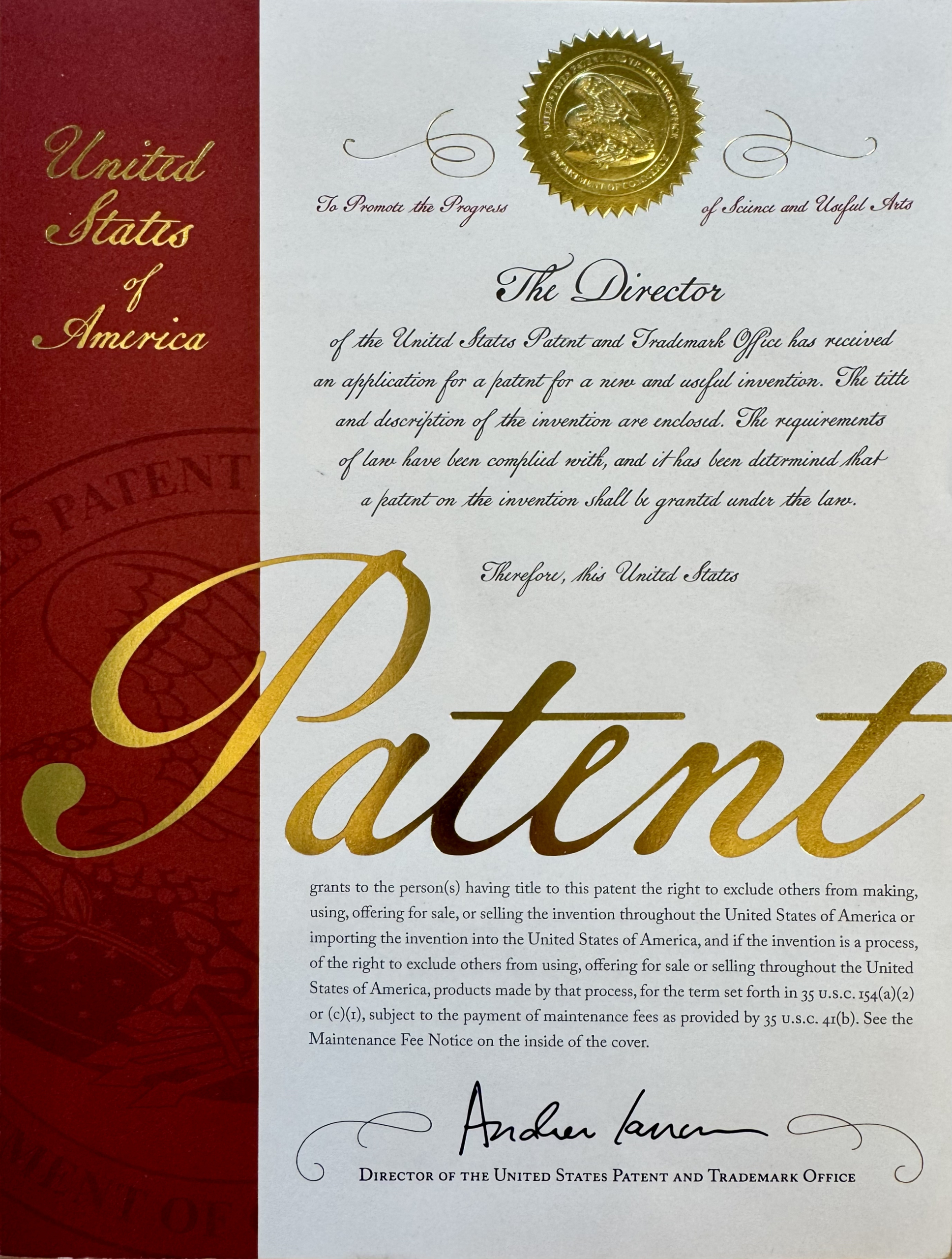
One80 System United States Patent
My doctor says I have degenerative disc disease. Is that causing my pain?
Degenerative changes are present on the MRIs of most adults over 40, including people with no pain whatsoever. While disc degeneration is real, it is a poor predictor of pain and an even poorer target for treatment. The pain you’re experiencing almost certainly has a functional, movement-based cause that is separate from — and addressable regardless of — what your MRI shows.
Will my back pain come back after treatment?
If the underlying movement dysfunction is fully corrected and you maintain the movement patterns and home program we give you, the answer is no — or not from the same source. We don’t just reduce your pain and send you home. We give you the understanding of why this happened, what we did to fix it, and exactly what you need to do to maintain the result. Most of our patients do not return with the same problem.
Call (970) 593-9300 for a FREE consultation — TODAY!
Sources
- Brinjikji W et al. Systematic literature review of imaging features of spinal degeneration in asymptomatic populations. American Journal of Neuroradiology, 2015.
- Chou R et al. Diagnosis and treatment of low back pain: a joint clinical practice guideline. Annals of Internal Medicine, 2007.
- Deyo RA, Mirza SK. Trends and variations in the use of spine surgery. Spine, 2006.
- Foster NE et al. Prevention and treatment of low back pain: evidence, challenges, and promising directions. The Lancet, 2018.
- Maher C, Underwood M, Buchbinder R. Non-specific low back pain. The Lancet, 2017.
Leave a Reply
Want to join the discussion?Feel free to contribute!